

What is Robotic Lawnmower
A robotic lawnmower is an autonomous robot used to cut lawn grass. A typical robotic lawn mower (in particular earlier generation models) requires the user to set up a border wire around the lawn that defines the area to be mowed. The robot uses this wire to locate the boundary of the area to be trimmed and in some cases to locate a recharging dock.
Benefits of Robotic Lawnmower
Robotic Lawnmower Require Less Storage Space
Compact size – Robotic lawnmower are generally smaller and more compact than traditional lawn mowers. Their design is focused on functionality and efficiency, allowing easy navigation and operation within confined spaces.
No fuel storage required – Unlike gas-powered lawn mowers that require space for fuel storage (such as in a shed or garage), robotic mowers rely on rechargeable batteries. This eliminates the need for storing fuels, oils, and other materials needed for optimal operation.
Robotic Lawnmower Are Convenient
Probably most importantly, robotic lawnmower don't cut into your free time. They operate at night or while you're at work according to your set mowing schedule. Besides the occasional edging, you won't need to worry about the state of your grass, so you can spend more time entertaining or relaxing outdoors.
Once the installation is out of the way, your mower will be almost entirely self-sufficient. Simply select the mowing schedule you wish on the onboard control panel, and it will handle the rest.
Robotic Lawnmower Mow Efficiently
Yes, robotic mowers really work. Grass grows at different rates, depending on the nutrient content in different areas of your lawn. Mowing just once a week can lead to inconsistent patches of thick and sparse growth, especially during the warmer months. A robot mower gives you that clean, even look by mowing more frequently.
Because the mower makes frequent, shallow cuts, your robot will maintain a consistent cutting height throughout your turf's growing season. Many autonomous mowers have an automatic spiral-cut feature that identifies thicker patches and dedicates extra mowing time to that area. This keeps your grass even and presentable all week long.
The random mowing pattern of a robot mower is designed to cover the whole lawn without leaving streaks or tire marks from following a set path. There's no easier way to cut grass evenly than by using a robot mower.
Robotic Lawnmower Are Less Harmful To The Environment – And To You
Robotic mowers operate on electricity rather than gas, being powered by rechargeable batteries. As such, they're an eco-friendly way to cut grass and eliminate issues such as dangerous emissions that contribute to atmospheric carbon buildup and are harmful when inhaled. Did you know the environmental impact of a gas-powered lawn mower operating for an hour is comparable to that of a car driving about 100 miles?
Robotic Lawnmower Are Quiet
Robotic mowers have another advantage over traditional ones: They barely make a sound. Their smaller cutting decks and lightweight cutting blades require less motor power than full-size electric mowers, allowing them to operate virtually silently.
Because you don't have to worry about disturbing the neighbors, you can let your robot mower run at night without losing sleep. This option is invaluable for homeowners who want a beautifully manicured lawn without ever having to see or hear the mower. Most autonomous mowers come with built-in anti-theft features, so you can sleep soundly while your mechanical mower pulls a graveyard shift.
Robotic Lawnmower Can Mulch
Robotic mowers often come with mulching capabilities, which means they cut grass into fine clippings that act as a natural fertilizer for the lawn. Instead of contributing to thatch buildup like full-sized grass clippings from traditional mulching mowers, finely mulched grass returns the nutrients from the blade tips to the soil and the grassroots.
Also called “grasscycling,” this process improves soil moisture retention, enhances microbial activity and soil health, and removes the need for collection and disposal of grass clippings.
Robotic Lawnmower Are Low-maintenance
With a robotic lawn mower, you don't have to change the oil, refill the gas, or replace spark plugs. Can you say low maintenance? Simply hose off the undercarriage occasionally, change the blades once or twice a year, and replace the battery every two to four years. Following these steps should get you 10-plus years out of your unit (sometimes even as much as 20 years).
Robotic Lawnmower Provide Long-term Savings
Robotic mowers have fewer moving parts than traditional ones, reducing maintenance costs. Since no gasoline is involved, you'll see substantial savings on fuel.
And let's not forget about durability. With fewer mechanical components and less wear and tear, robotic mowers generally experience fewer breakdowns, reducing the need for costly repairs. Besides that, they have a longer lifespan compared to traditional mowers. Their durable design and efficient operation help them last longer, providing better value for your initial investment.
-
![Remote Control Robot Lawn Mower]() Remote Control Robot Lawn Mowerwhat is Robot Lawn Mower The remote control lawn mower is an intelligent device that simplifies garden maintenance by allowing operation via remote control. It significantly improves work efficiency-its weeding capability is 8 to 10 timesread more
Remote Control Robot Lawn Mowerwhat is Robot Lawn Mower The remote control lawn mower is an intelligent device that simplifies garden maintenance by allowing operation via remote control. It significantly improves work efficiency-its weeding capability is 8 to 10 timesread more -
![Remote Control Lawn Mower Farm]() Remote Control Lawn Mower FarmThe Remote Control Lawn Mower has small size, high horsepower, compact structure and flexible operation. Crawler drive, strong climbing ability. It truly realizes the separation of man and machine, freeing operators from heavy physicalread more
Remote Control Lawn Mower FarmThe Remote Control Lawn Mower has small size, high horsepower, compact structure and flexible operation. Crawler drive, strong climbing ability. It truly realizes the separation of man and machine, freeing operators from heavy physicalread more -
![Home Lawn Mower for Mowing Lawn]() Home Lawn Mower for Mowing LawnIntroducing the Home Lawn Mower for Mowing Lawn, a revolutionary tracked remote-controlled lawn mower designed to take the hassle out of lawn maintenance. This innovative mower is perfect for homeowners who want to achieve a pristine lawnread more
Home Lawn Mower for Mowing LawnIntroducing the Home Lawn Mower for Mowing Lawn, a revolutionary tracked remote-controlled lawn mower designed to take the hassle out of lawn maintenance. This innovative mower is perfect for homeowners who want to achieve a pristine lawnread more


Complete Product Range
Lime soil mixer, road cold recycling machine, grader, trencher, excavator, tracked transport vehicle, tracked trencher, rotary tiller, skid steer loader, roller, forklift, small excavator, loader, four-wheel tractor, drive rake, mixing tank, flipping plow, tree root powder crusher, lawn mower.
Quality Services
Our team is committed to delivering high-quality services to our clients. We use the latest technologies and tools to ensure that our services exceed your expectations.
Quality
We offer high quality services and products that are relatable and resonate with your business needs.
need something done?
Robotic lawnmower have unique features that make them stand out from traditional mowers. The most notable differences are the convenience a robotic mower offers and the time a robotic mower saves you by maintaining your lawn with minimal work from you.
This also means less exposure to heat and allergens when operating a traditional mower. In addition:
Robotic lawnmower mow in random patterns; therefore, they don't create rows of wheel ruts that can prevent the grass from growing upright.
You don't need to remember to keep the battery of a robotic mower charged. The robotic lawn mower returns to its charging station when it needs to and begins mowing again once it's charged.
Since they rely on boundary and guide wires or sensors to define the limits of the lawn and are much quieter than gasoline-powered mowers, some robotic lawnmower are capable of mowing at night.
Some robotic lawnmower can mow in light rain. Others have a sensor that directs the mower back to its charging station when it begins to rain.
Robotic lawnmower are designed to trim the grass blades a little at a time, in some cases taking off less than an inch. Removing a small portion of the grass blade leads to better growth, reduces stress on the lawn and helps decrease vulnerability to disease and pests. As an added benefit, the small clippings create a natural fertilizer for the lawn.
Robotic lawnmower require less storage space. During the mowing season, they can remain at their charging station when they're not operating. When you need to store them, such as at the end of the season, these smaller devices take up less space than a standard mower.
How Do Robotic Lawnmower Work?
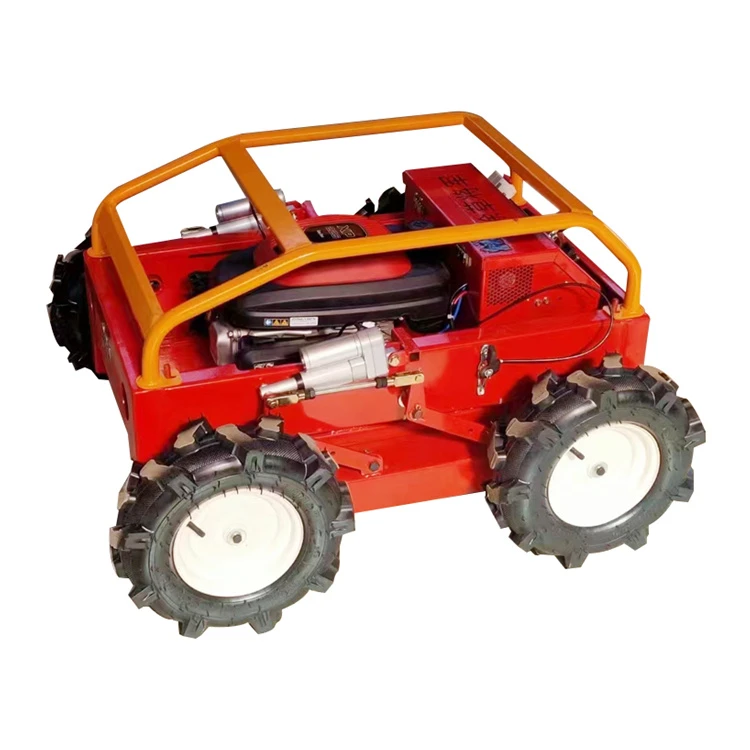
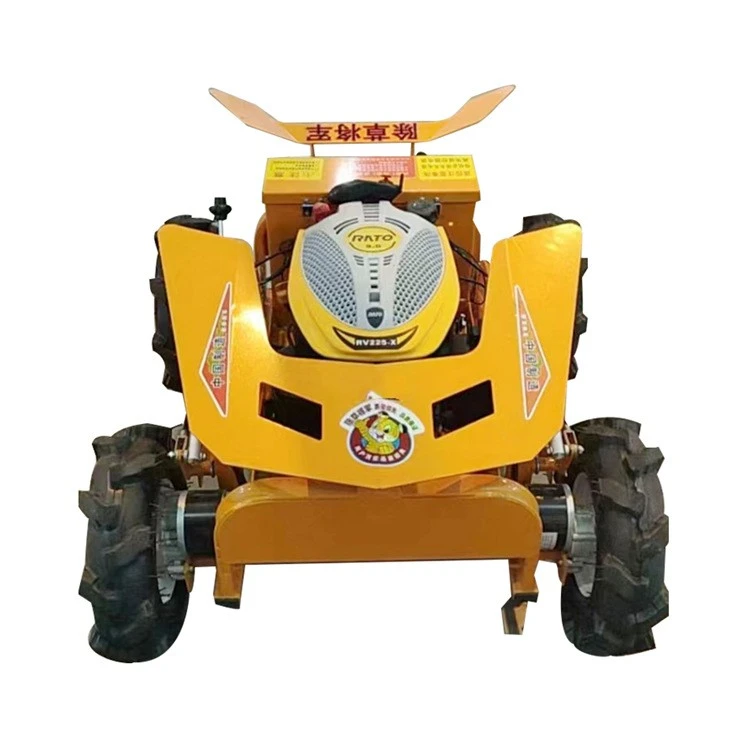
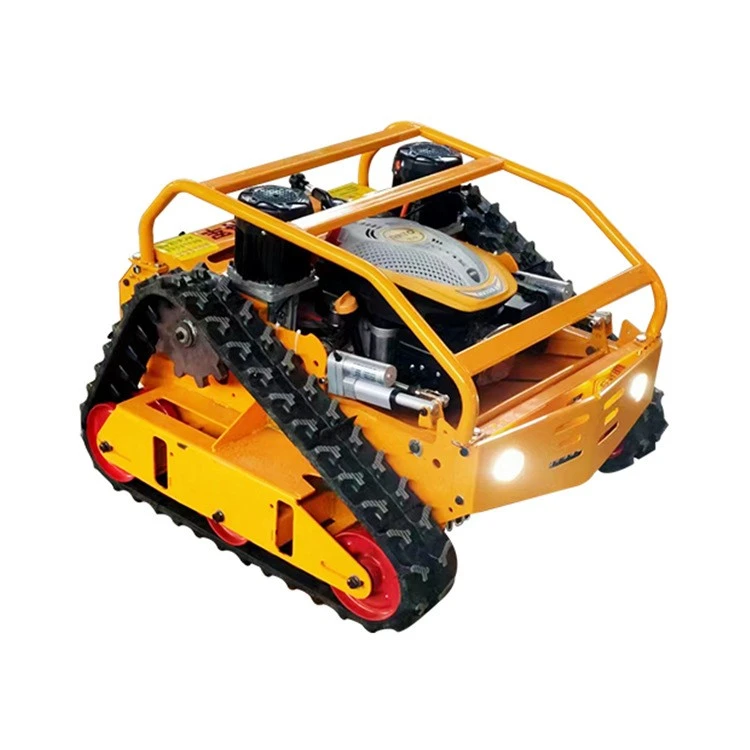

Depending on the exact type of robot lawn mower you buy, it'll work in a certain way.
Traditionally, robotic lawnmower worked on the basis of a boundary wire.
This boundary wire takes the form of a copper cable that is wrapped in a protective insulating material. The wire is then buried around the perimeter of the lawn (the area within which you want the robo mower to operate).
Typically, this boundary wire is buried at a depth of approximately 10 to 30 cm. This ensures that it's out of sight and not despoiling the aesthetics of the garden. (note, the optimal depth to bury the wire may vary from mower to mower). It's not always necessary to bury the boundary wire, however. In many cases, it's possible to ‘staple' the wire to the ground and allow the surrounding grass to grow over it.
Once installed, this boundary wire sets the perimeter within which the lawn mower can operate. In effect, it's the job of the boundary wire to stop the robot mower from ‘wandering off' away from your garden.
With the boundary wire in place, the robot mower can then start doing its job - mowing your lawn!
The more basic robotic lawnmower mow in a random fashion. They will basically wander around the lawn mowing until they reach the area of the boundary wire. They'll then turn around and continue mowing in another direction.
As you can imagine, this type of mowing isn't particularly efficient and also means the mower has to be in almost continual operation.
In recent years, new robotic lawnmower have been launched which can ‘map out' a lawn and thus mow it in a more intelligent and efficient fashion.
In terms of cutting performance, robotic lawnmower operate in a similar fashion to regular mowers. They use a cutting deck which uses quickly rotating blades to cut grass.
What To Look For In A Robotic Lawnmower?
Smartphone App
During our tests, we look at how easy it is to use the app that comes with some of these robot mowers – we've found they range from limited to one operating system, to versatile and simple to use. You'll find it reasonably simple to use an app, assuming it works with your smartphone, rather than fiddle with the onboard controls.
Whether you need to use the app really depends on how autonomous the robot mower is. If it comes with sensors that detect rain, then you won't need to reschedule. No mower cuts particularly efficiently in wet grass.
Lawn Size
We've seen robot mowers suitable for lawns of up to 5000sqm, and as small as 250sqm. The maximum we've tested was 3000sqm and our testers generally agree with those manufacturer recommendations for maximum lawn size. If you select a robotic lawnmower too small for your lawn size, you're likely to run out of guard wire or the mower is going to run out of puff based on its battery size. Generally manufacturers recommend buying one that's suitable for a yard a little larger than your own.
Slopes And Uneven Lawns
As robot mowers are powered by batteries, and they don't have a human behind them making sure they can get up a slope or avoid a dip, it's a good idea to pay attention to the slope that these mowers claim they're able to cope with. They'll give you the slope angle in degrees but the flatter the better.
An uneven lawn means dips. While we test how easily the mowers manage these dips and strange gradients that are in every lawn, the flatter your lawn, the more likely the mower is to be able to make a full round of your lawn. If the dip is significant, you might consider filling it in, or putting a barrier around it and investing in a sensor for the robotic lawnmower so it can avoid it.
Rain Sensors
No mower cuts well in the wet, and robotic lawnmowers are no exception. A rain sensor can be an optional extra or come with the product by default. A rain sensor will trigger off a variety of options, depending on the brand and model. It might make the robotic lawnmower skip a scheduled mow, or it might alert you and ask if you want to continue with the schedule.
Obstacle Sensors
They aren't just for rain though, as many robot mowers have sensors for anything they encounter. If you have trees, bushes or other obstacles that can't be removed before the lawnmower starts off, they'll generally avoid these elements, just as a robot vac would in the house.
Multi-zone
Want your robotic lawnmower to mow both the front and back lawns? You might need a multi-zone mower, so you can program both lawn sizes and design. You'll have to carry or wheel the robotic lawnmower between the two spaces, as they aren't smart enough to move themselves there – yet.
Battery Life
The most expensive element of any mower will be the battery, and these are larger depending on the size of your lawn you want it to cover. All of the ones we've tested are lithium-ion. Check in with the manufacturer prior to buying to see how long they'll stock the batteries and how much they are (they can be an expensive replacement) and like all lithium-ion batteries you'll start to see slow degradation over time, which will be the robot mower returning to its base unit more frequently for recharging.
Types of Robotic Lawnmowers
Physical Boundary Mowers
Physical boundary mowers rely on invisible wires for navigation that you must install before use. You can customize the area you want your mower to cut and help it avoid obstacles and designated areas, like gardens and flowers.
The perimeter boundary is typically a thin strand of wire encased in a PVC sheath. It starts and ends at the mower charging station. You can wrap it in your desired configuration to cover your entire lawn.
The charger sends a weak electrical current through the perimeter wire, creating a magnetic field around your lawn area where you've designated the mower to work.
A physical boundary mower's built-in sensors detect when it nears the barrier. As the mower approaches the wire, the magnetic field sends the message to the mower that it needs to turn around for another pass.
Beyond the wire on the outside of your lawn, the wire creates a reverse magnetic field. If, for some reason, your mower ends up outside of its designated area, the mower system should immediately detect it and report it to you via the management app.
Some instances where the risk of the mower moving outside the boundary line is higher include steep slopes in the lawn, a power failure, defected perimeter wire, or a mower sensor failure.
Virtual Boundary Mowers
Virtual boundary mowers don't have a physical perimeter wire restricting their movement. Instead, virtual boundary mowers use sensors and machine learning to determine where the boundaries are. The robot mower learns how to maneuver without needing a physical boundary.
The technology used to create virtual boundaries varies by manufacturer, but many use GPS, Bluetooth beacons, and machine learning algorithms to aid navigation. All virtual boundary mowers use sensors to detect physical landmarks, obstacles, and changes in terrain.
Virtual boundary mowers can learn their physical boundaries without any additional work from you. If your property's landscaping layout changes, so will the boundary of your robot mower. The mower continues to “learn” and adjust to its surroundings thanks to AI and machine learning.
Our Certificate
3C certification, gold certification, CE certification

Company Profile
The company is located in Jining, Shandong, known as the hometown of Confucius and Mencius and the land of etiquette. It is a group enterprise that integrates scientific research and development, processing and manufacturing, and trade services. It includes multiple departments such as the technology center, domestic trade department, international trade department, production department, quality inspection department, logistics department, and after-sales department, working together as a team. After years of hard work and innovation, we have become a professional mechanical manufacturer that specializes in scale, complete sets, technology, and energy conservation.


Asked Questions
As one of the leading cropper manufacturers in China, we warmly welcome you to buy discount cropper in stock here from our factory. All customized products are with high quality and low price.
Home Lawn Mower for Mowing Lawn, cropper, Robotic Lawnmower-
![Three Point Suspension Track Bulldozer]() Three Point Suspension Track BulldozerThe three-point suspension track bulldozer has strong applicability: it is suitable for operation in various mountains,read more
Three Point Suspension Track BulldozerThe three-point suspension track bulldozer has strong applicability: it is suitable for operation in various mountains,read more -
![Rice Field Track Pulping Machine]() Rice Field Track Pulping MachineThe paddy track beater is a remote-controlled device that combines electronic integrated control system and hydraulicread more
Rice Field Track Pulping MachineThe paddy track beater is a remote-controlled device that combines electronic integrated control system and hydraulicread more -
![Crawler Straw Returning Machine]() Crawler Straw Returning MachineThe tracked straw returning machine is suitable for various mountainous areas, hills, plains, dry fields, greenhouses,read more
Crawler Straw Returning MachineThe tracked straw returning machine is suitable for various mountainous areas, hills, plains, dry fields, greenhouses,read more -
![25 Horsepower Track Ridge Laminating Machine]() 25 Horsepower Track Ridge Laminating MachineThe 25 horsepower track ridge laminating machine adopts high horsepower power machinery and deep rotary tillage effect,read more
25 Horsepower Track Ridge Laminating MachineThe 25 horsepower track ridge laminating machine adopts high horsepower power machinery and deep rotary tillage effect,read more -
![Remote Control Robot Lawn Mower]() Remote Control Robot Lawn Mowerwhat is Robot Lawn Mower The remote control lawn mower is an intelligent device that simplifies garden maintenance byread more
Remote Control Robot Lawn Mowerwhat is Robot Lawn Mower The remote control lawn mower is an intelligent device that simplifies garden maintenance byread more -
![Four-wheel Tractor With Multiple Uses]() Four-wheel Tractor With Multiple UsesIntroduction: Equipment used for field operations, belonging to the category of tractors. That is, tractors with wheelsread more
Four-wheel Tractor With Multiple UsesIntroduction: Equipment used for field operations, belonging to the category of tractors. That is, tractors with wheelsread more


