

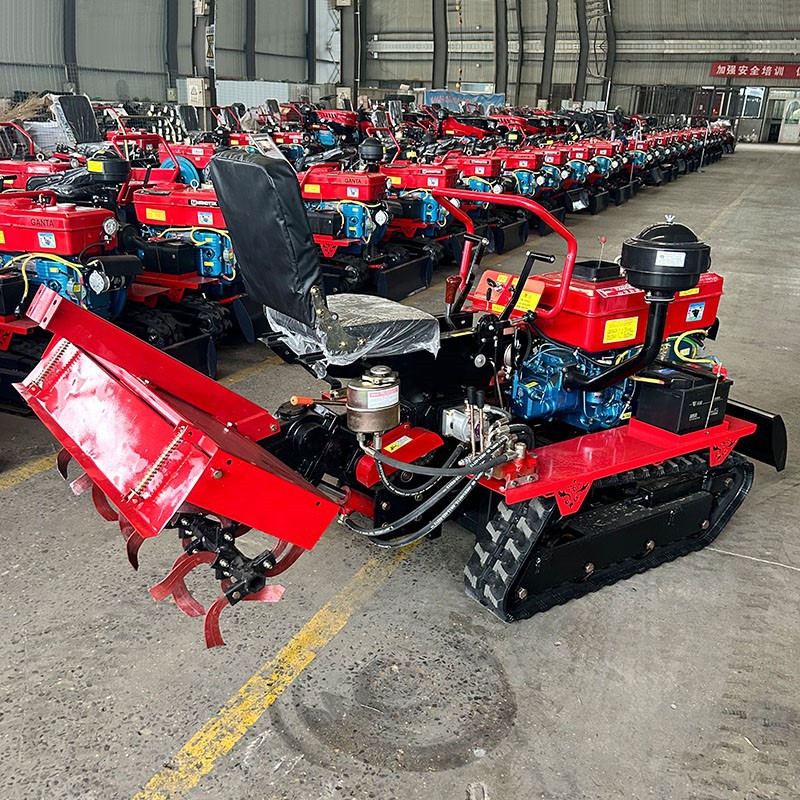
I. Overview of crawler tractors
Crawler tractors are agricultural power machinery with crawler walking devices. Compared with wheeled tractors, crawler tractors have significant advantages such as low ground pressure, large traction and good passability. Since their introduction in the early 20th century, crawler tractors have played an important role in agriculture, engineering and military fields. Today in 2025, crawler tractor technology has developed to a new height, integrating modern technical features such as intelligence, electrification and precision.
II. Key technologies of crawler tractors
1. Walking system technology
Modern crawler tractors use high-strength alloy steel or composite track plates with a service life of 8000-10000 hours. Rubber crawler technology is becoming more and more mature, and vibration noise is reduced by more than 40%. The intelligent tensioning system can automatically adjust the tightness of the crawler and reduce power loss by 5-8%.
2. Powertrain system
Traditional diesel power: adopts high-pressure common rail electronic injection technology, with a thermal efficiency of more than 45%;
Hybrid system: diesel engine + electric motor combination, fuel efficiency increased by 25-30%;
Pure electric system: large-capacity lithium battery pack, 4-6 hours of endurance, zero-emission operation;
3. Intelligent control system
Integrated GNSS positioning, Internet of Things and AI technology to achieve:
Automatic driving accuracy ±2.5cm;
Intelligent adjustment of operating parameters;
Remote monitoring and fault diagnosis;
Cloud management of operating data;
III. Application advantages of modern crawler tractors
1. Soil protection: The ground pressure is only 30-50kPa, which is much lower than the 80-120kPa of wheeled tractors, effectively reducing soil compaction;
2. Adaptation to harsh working conditions: Maintaining more than 90% traction efficiency in complex terrains such as wetlands and slopes;
3. High-power operation: The maximum power has reached more than 600 horsepower, meeting the needs of heavy-duty operations such as deep plowing and ditching;
4. Precision agriculture: Perfectly matched with variable fertilization, precision seeding and other agricultural tools, the operation efficiency is improved by 35%;
IV. Technology development trend
1. New energy: Hydrogen fuel cell technology is expected to be commercialized in the next five years;
2. Unmanned cluster: Multi-machine collaborative operation system will improve the efficiency of large-scale farmland operations;
3. Modular design: Quickly replace working devices to achieve multiple uses of one machine;
4. Digital twin technology: Virtual commissioning and predictive maintenance will reduce the cost of use;
V. Purchase and use suggestions
1. Choose the appropriate track type (steel/rubber) according to the type of operation and soil conditions;
2. Pay attention to the level of intelligent configuration, and give priority to models that support remote upgrades;
3. Regularly check the track tension and the status of the supporting wheels;
4. Pay attention to the center of gravity control when operating in complex terrain, and the slope should not exceed 15°;
With the acceleration of agricultural modernization, crawler tractors will continue to play an irreplaceable role in improving agricultural production efficiency and protecting the quality of cultivated land. Future technological development will further strengthen its position as the "main force of intelligent agricultural machinery."


