


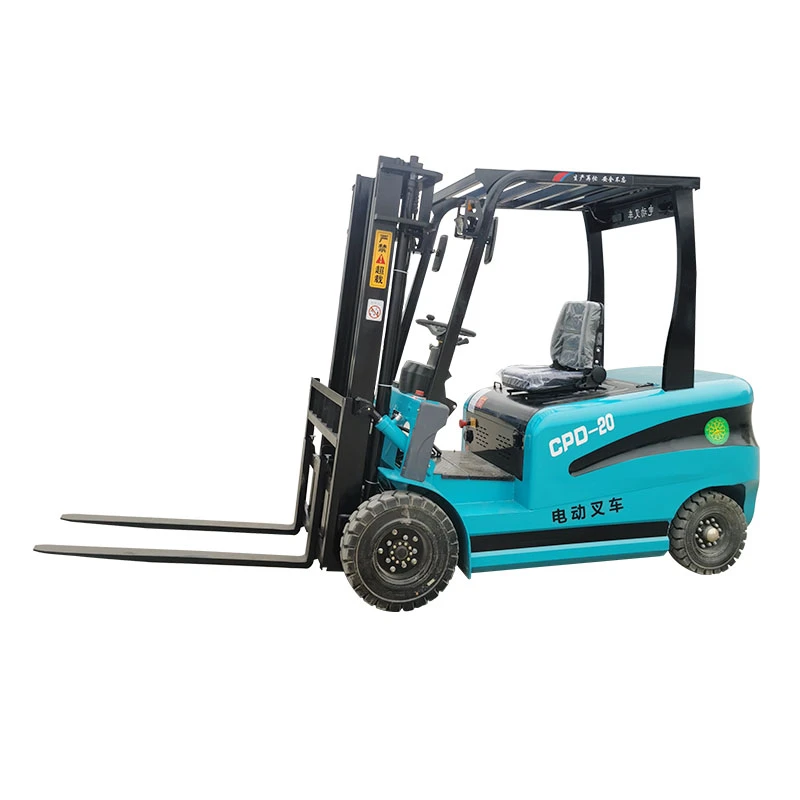
1. Definition and core advantages
Electric forklift is a material handling equipment powered by batteries, which is widely used in warehousing, logistics, manufacturing and other fields. Compared with traditional internal combustion forklifts, its core advantages are reflected in three aspects:
Environmental protection: zero tail gas emissions, low noise (<65 decibels), in line with the "dual carbon" policy orientation. Economical: Lower life cycle cost, the popularization of lithium battery technology has reduced energy consumption costs by more than 30%, and the maintenance cost is only 50% of that of internal combustion forklifts.
Intelligent: Modules such as electric steering systems and acceleration control are driven by electrical signals, reducing operating intensity by 40%, while supporting advanced functions such as unmanned driving and automatic navigation.
2. Technological evolution and innovative breakthroughs
Battery technology iteration: Lead-acid batteries are gradually replaced by lithium batteries, the latter's energy density is increased to 200Wh/kg, the battery life is extended to 8-10 hours, and the charging efficiency is increased by 50%. Solid-state battery technology has entered the trial stage and is expected to be mass-produced in 2030, which can further break through the bottleneck of low-temperature performance.
Intelligent upgrade: Internet of Things technology enables remote monitoring and predictive maintenance, reducing the failure rate by 25%; unmanned forklifts (AGVs) have reached a penetration rate of 15% in automobile manufacturing and e-commerce warehousing scenarios through laser radar and visual recognition technology.
Structural optimization: Technologies such as wide-view gantry and hydraulic motor speed control system improve operational stability, and the load range covers 1-10 tons to meet the needs of complex working conditions.
3. Market status and competition pattern
Market size: In 2024, China's electric forklift sales will exceed 350,000 units, with a market size of 40.9 billion yuan and a compound annual growth rate (CAGR) of 14.2%. The proportion of lithium battery forklifts will increase from 35% in 2023 to 42% in 2024, and is expected to reach 50% in 2025.
Competitive landscape: Heading companies: Zhongli Co., Ltd., Hangcha Group, and Anhui Heli occupy 60% of the market share. Zhongli has ranked first in sales for five consecutive years with its lithium battery forklift technology.
International brands: Toyota, Linde, etc. are accelerating their localization layout and seizing the high-end market through joint ventures or acquisitions.
Regional distribution: East China and South China contribute 65% of sales, and the central and western regions have a growth rate of 20% due to policy support.
4. Application scenarios and industry penetration
Logistics and warehousing: The explosion of e-commerce has driven demand. In 2024, the penetration rate of electric forklifts in the field of smart warehousing will exceed 70%, of which AGV models account for 25%.
Manufacturing: Widely used in the automotive and electronics industries, the handling efficiency of production lines has increased by 30%, and customized demand (such as explosion-proof and cold chain types) has increased significantly.
Food and medicine: Low noise and pollution-free characteristics meet the requirements of clean environment and become standard equipment in the food and beverage industry.
5. Future development trends
Policy drive: The Ministry of Industry and Information Technology's "Industrial Vehicle Industry Standard Conditions" and other policies accelerate the elimination of high-energy-consuming equipment, and the electrification rate target will be increased to 80% in 2025.
Technology integration: 5G+AI technology promotes the development of "cloud-controlled forklifts" to achieve cluster scheduling and real-time path optimization.
Service transformation: From equipment sales to the "product + service" model, customized maintenance, battery leasing and other value-added services will account for 30%.
Green manufacturing: Hydrogen fuel cell forklifts have entered the demonstration stage, and the carbon footprint of the entire life cycle has been reduced by 50%, which is in line with the ESG investment trend.
6. Challenges and coping strategies
Cost pressure: Lithium battery price fluctuations affect profit margins, and risks need to be hedged through large-scale production and technology cost reduction.
International competition: The European and American markets have increased anti-dumping investigations on domestic forklifts, and companies need to strengthen compliance layout and localized service networks.
Talent gap: The demand for intelligent operation and maintenance talents has surged, and targeted training in school-enterprise cooperation has become an industry consensus.
Conclusion
The electric forklift industry is at the intersection of technological revolution and market expansion. With the release of policy dividends and the acceleration of technological iteration, the global market size is expected to exceed US$80 billion in 2030. Enterprises need to focus on technological innovation, deepen scenario applications, and build a global service system in order to seize the initiative in the wave of green smart manufacturing.


