


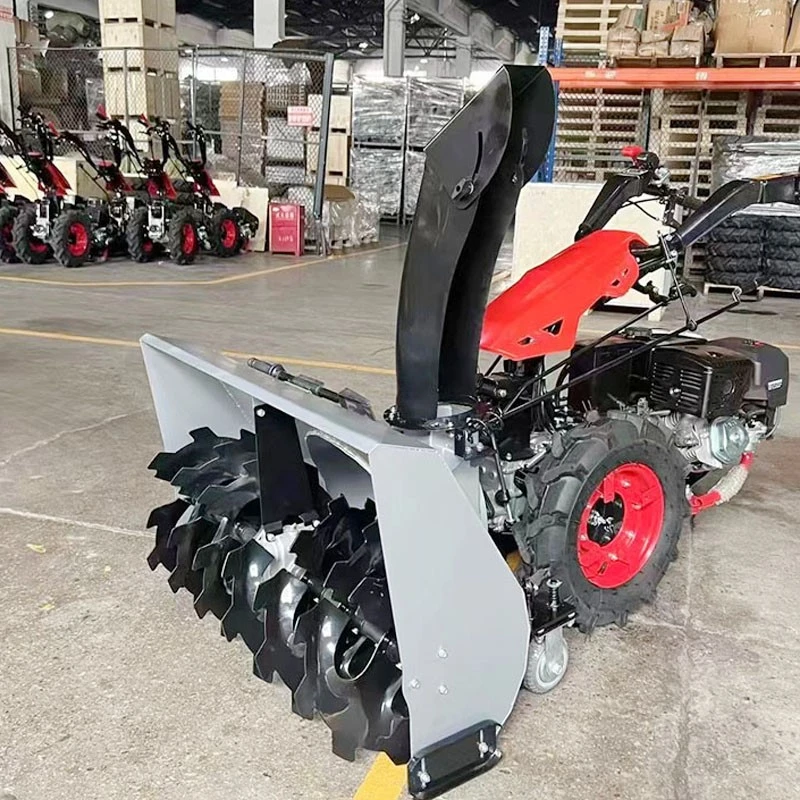
1. Working principle and classification system
Snowplows achieve efficient snow removal through mechanical force and fluid mechanics principles, and its core lies in energy conversion and snow quality processing. According to the mechanism of action, they can be divided into three categories:
Push type: Relying on snowplows or plow blades to push snow to the roadside, the structure is simple but the function is single, and it is easy to damage the road surface.
Snow throwing type: A two-stage system of spiral auger snow collection + impeller snow throwing is adopted. The snow is thrown to the designated position through the high-speed rotating impeller (the speed can reach 2000rpm), and the snow throwing distance can reach 8-20 meters.
Snow blowing type: Using aircraft engines to generate high-pressure airflow (>100kPa) to blow away the snow, it is suitable for open areas such as airports, but the energy consumption and noise problems are prominent.
Multi-stage snow removal components have become standard for high-end models: the first-level snow removal blade breaks and compacts the snow layer, the second-level component increases the height of the snow flow, and the third-level high-speed blade (the speed is 6-18 times higher than the first level) finally throws the snow into the duct. This grading process increases the snow removal efficiency to more than 95% and avoids damaging the road markings.
2. Analysis of core technology innovation
Intelligent control system
Integrated GPS positioning and snow condition sensors to achieve adaptive operation mode switching. For example, the pressure sensor monitors snow resistance in real time and automatically adjusts the blade speed and travel speed.
Automatic adjustment system for snow throwing port: The servo motor drives the gear set, and cooperates with the position sensor (accuracy ±2°) to keep the snow throwing direction constant. When the fuselage turns, the system controls the snow throwing cylinder to rotate in the opposite direction at the same angle to ensure the same snow throwing trajectory.
Structural optimization design
Modular snow sweeping wheel: The shell is set with a standard rotating cavity, and the brush wheel (thick snow) or brush wheel (thin snow) can be quickly replaced, and the replacement time is <3 minutes.
Wear-resistant components: The snow removal blade made of high carbon steel + tungsten carbide coating has a lifespan increased by 200% compared with traditional materials, and is suitable for high-wear roads such as concrete.
Ergonomic optimization: The hydraulic buffer handle and shock-absorbing chassis reduce operating fatigue and meet ISO 2631 vibration standards.
3. Key operation and maintenance points
Standardized operation directly affects the life of the equipment and operational safety:
Start-up procedures: The hydraulic system needs to be started at idle speed, and the pressure should be increased slowly through the flow control switch to avoid motor shock.
Speed control: The optimal operating speed is 5-8km/h. Too fast will cause snow to affect the line of sight, and too slow will reduce the efficiency of snow removal.
Wear management: The life of the wire roller brush is about 200-300 hours, and the bolts need to be adjusted regularly to control the compaction of the bristles. Check the gap between the three-level snow removal components every 50 hours, and the deviation >0.5mm needs to be calibrated.
Pressure relief maintenance: The engine must be turned off and the pressure must be relieved before disassembling the hydraulic joint to prevent high-pressure oil from spraying.
4. the development trend of cutting-edge technology
Snowplow technology is undergoing a dual transformation of intelligence and greening: Autonomous operation system The unmanned snowplow based on SLAM technology has entered the testing stage, and centimeter-level path planning is achieved through multi-sensor fusion (lidar + millimeter-wave radar), and the snow removal coverage rate is >99%.
Energy efficiency breakthrough
The new solid-state battery pack has an energy density of 400Wh/L, and with regenerative braking technology, the battery life of electric snowplows is increased by 40%. The hydrogen fuel cell model launched in 2024 has achieved a -35℃ cold start.
Multi-function integrated platform
Modular design has become the mainstream, and accessories such as de-icing rollers and spreaders can be quickly installed. For example, a flagship model integrates a microwave ice melting device with a de-icing efficiency of 200㎡/h.
Digital twin maintenance
The IoT sensor collects equipment operation data and builds a digital twin model to predict faults. Experimental data shows that this technology reduces unexpected downtime by 70% and maintenance costs by 35%.
Industry challenges and prospects: The current battery low-temperature performance (-20℃ capacity attenuation>30%) and complex snow condition recognition accuracy (wet snow misjudgment rate 15%) are still technical bottlenecks. The next generation of snowplows will explore the fusion of superconducting motors and AI vision, with the goal of achieving an all-weather unmanned snow removal operation cluster by 2028.
Snowplows have evolved from simple machines to complex systems that integrate mechanical engineering, materials science, and artificial intelligence. As extreme climates occur more frequently, their technological evolution will continue to focus on three dimensions: energy efficiency, environmental adaptability, and human-machine collaboration, providing key technical support for winter urban operations.


