

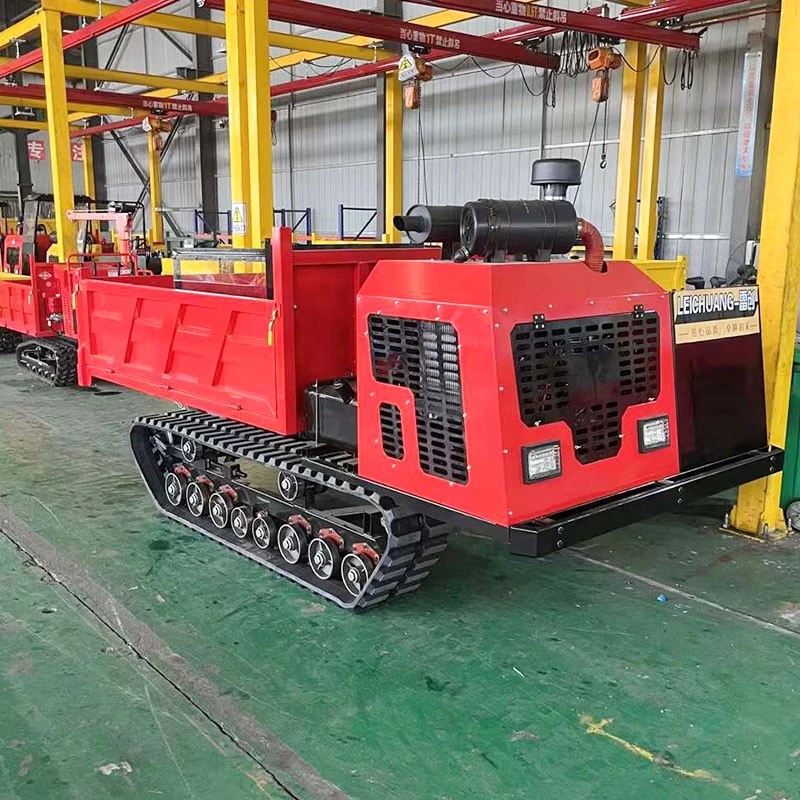
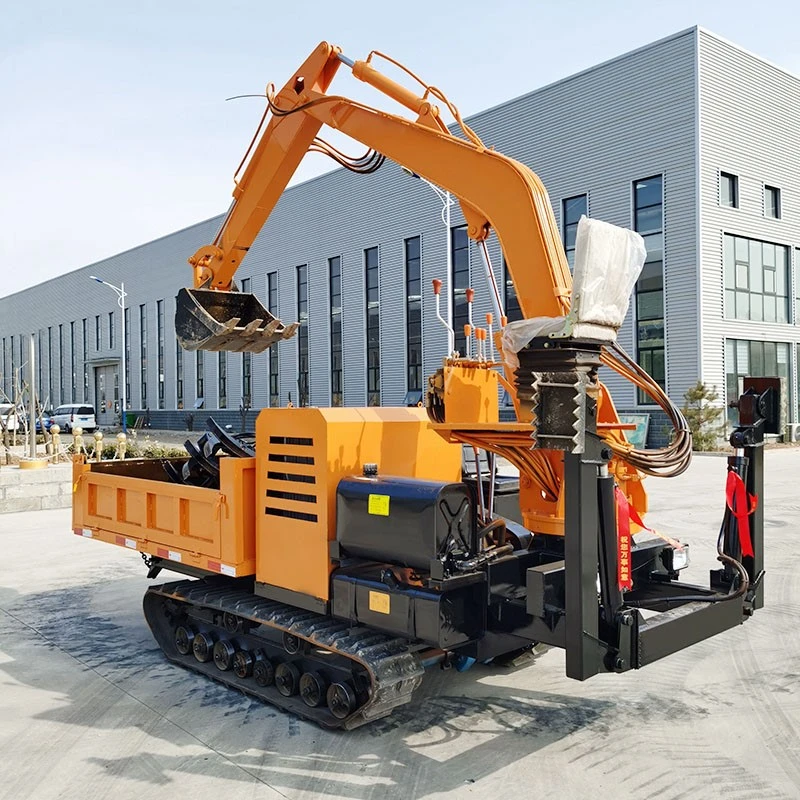
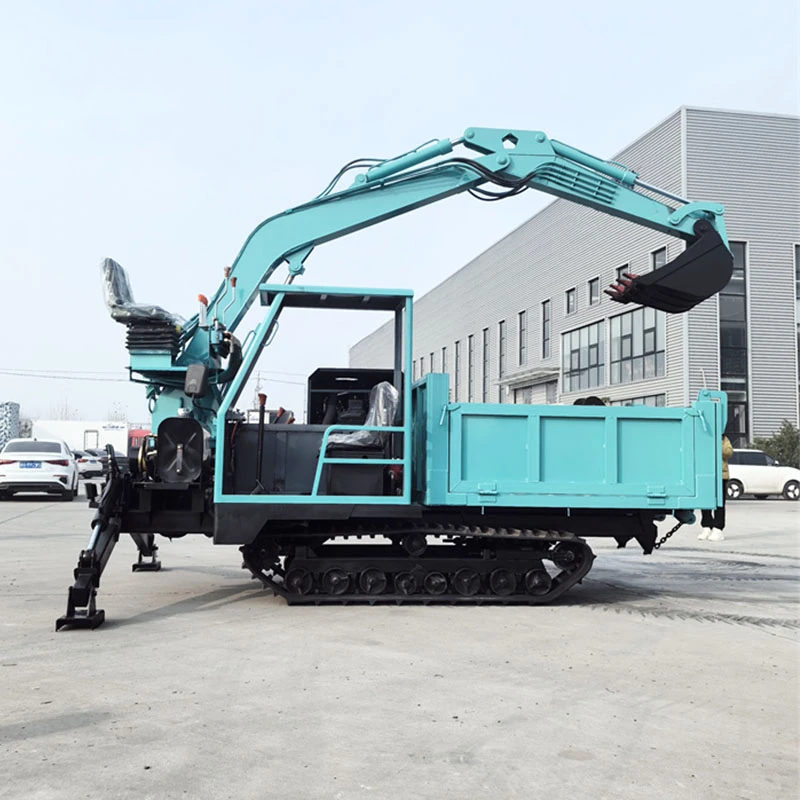
1. Definition and core advantages of crawler transporters
Structure and working principle
Track system: composed of metal links, it disperses pressure by increasing the ground contact area, adapts to complex terrains such as mud, sand, and snow, and has traction that is more than 30% higher than wheeled vehicles.
Drive and suspension: The engine or electric motor provides power, and the transmission system drives the crawler; the suspension system absorbs road impact and improves stability.
Core advantages
All-terrain capability: excellent performance in steep slopes (climbing force of more than 30°), wetlands, rugged mountain roads and other scenes, protecting the ground (such as farmland and asphalt roads).
High load and efficiency: The load range covers 1-30 tons, and 5-10 tons models account for 55.45% (mainstream models), which are suitable for heavy equipment transportation and reduce multiple handling losses.
Safety: The low center of gravity design reduces the risk of rollover, and is equipped with hydraulic steering, intelligent braking and emergency braking systems.
2. Analysis of the Global and Chinese Markets for Tracked Transporters
Market Size and Growth Global:
The market size in 2024 is approximately US$731 million, and is expected to reach US$1.042 billion in 2031 (CAGR 5.3%).
China: The market size in 2024 will reach RMB XX billion (data not directly provided, but [3] mentioned that it will reach RMB XX billion in 2024), benefiting from infrastructure and agricultural mechanization policies.
Market Segment Structure
By load:
5-10 tons: market share 55.45%, applied in construction and pipeline construction
<5 tons: market share 30%, applied in agriculture and forestry
>10 tons: market share 15%, applied in mining and large-scale infrastructure
By application field:
Construction and Utilities (36%): pipeline construction, construction materials transportation.
Agriculture (25%): agricultural products, fertilizer transportation, adapted to farmland terrain.
Military and Rescue: material transportation, complex terrain rescue.
Regional market
Europe: the world's largest market (37.34%), with leading technology.
Asia Pacific: the fastest growing, China and Japan dominate production capacity; Southeast Asia/India has great potential (infrastructure demand).
3. Development of crawler transport vehicle technology and intelligent trends
AI and automation
Autonomous navigation: LiDAR + GPS realizes environmental perception, path planning, and adapts to terrain without markings.
Remote control: Remote control in dangerous areas (such as mines) to improve safety.
Data analysis: Real-time monitoring of faults, optimization of energy consumption, and reduction of maintenance costs by 20%.
Power system innovation
Electrification: Pure electric models reduce carbon emissions (such as urban gardening operations), and hybrid power balances endurance and environmental protection.
Hydrogen energy exploration: In the pilot of zero-emission technology, there is great potential for long-term substitution.
Lightweighting and material upgrades
High-strength alloy steel improves the wear resistance of crawlers, and composite body weight is reduced by 10%-15%, improving energy efficiency.
4. Challenges and solutions for the crawler transporter industry
Core pain points
High maintenance costs: The crawler system is frequently replaced, and the cost is 30% higher than that of wheeled vehicles.
Speed limit: The average speed is <20km/h, which is lower than that of wheeled vehicles.
Raw material fluctuations: Steel prices affect manufacturing costs (accounting for 40% of the total vehicle cost).
Coping strategies
Modular design: Quickly replace parts and reduce downtime.
Supply chain optimization: Establish regional raw material reserves to hedge price risks.
Technology iteration: Develop new sealing structures to extend the life of crawlers (such as double seals at the end of the shaft to prevent mud and water intrusion).
5. Future development trends of crawler transporters
Intelligence and unmanned
In the L4 level autonomous driving technology test, the goal is to achieve fully unmanned transportation in mining areas/farmland.
Green transformation is accelerated
Policy drive: China's "dual carbon" goal will drive the electrification rate to exceed 40% by 2030.
Customization and scenario expansion
Narrow body models: mine tunnel operations. Military explosion-proof type: adapted to battlefield environments.
Global competition
Chinese companies seize the Southeast Asian and African markets with their cost-effectiveness (20% lower than international prices).
Summary
The crawler transporter industry is in a period of dual opportunities for technology upgrades (AI+electrification) and market expansion (infrastructure in emerging countries). In the short term, it is necessary to break through the high maintenance costs and speed bottlenecks. In the long term, intelligence and green energy will reshape the industry landscape. Chinese companies are expected to accelerate import substitution and expand their global share through cost-effectiveness advantages and policy dividends. Investors can focus on leading companies in electrification technology and supply chain layouts in emerging markets.


