

From remote mines to wind farm construction, adaptive technologies help enhance efficiency and sustainability
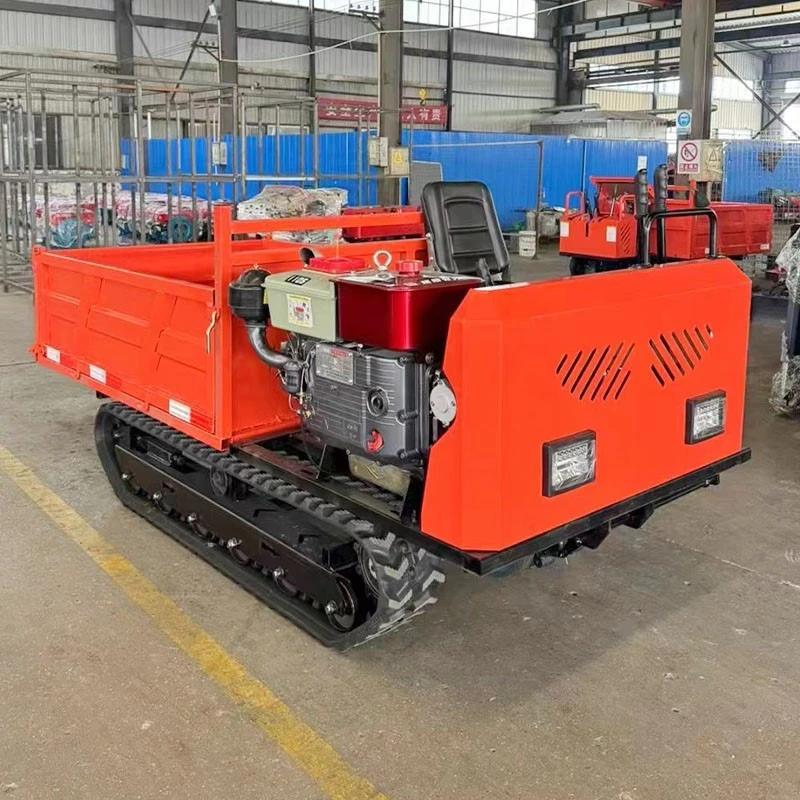
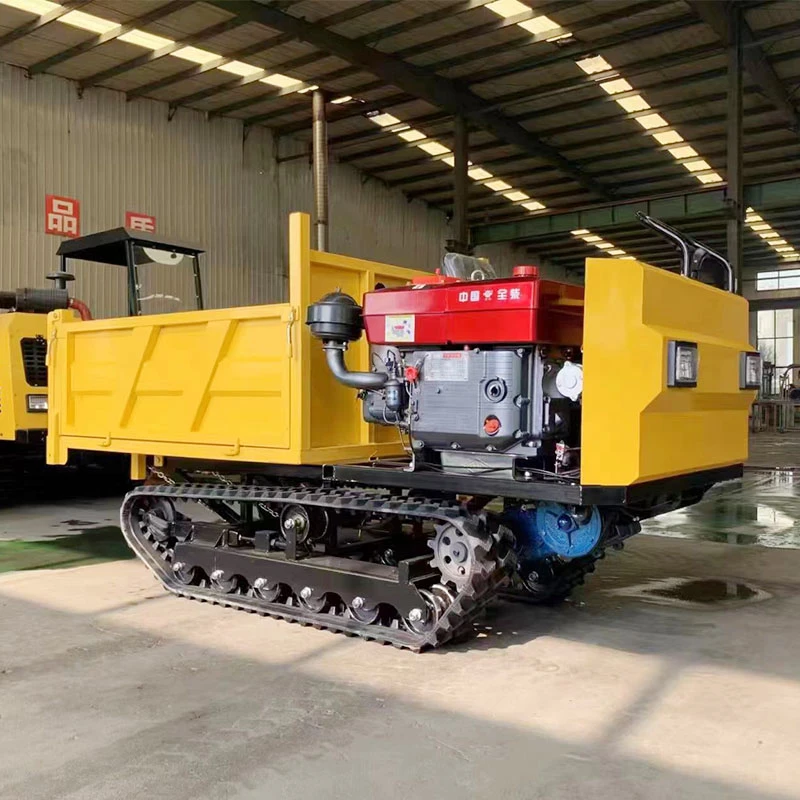
As global infrastructure extends to complex terrains - mountain mines, marshes, offshore wind farms - traditional wheeled dump trucks face numerous limitations in terms of stability, ground pressure and environmental impact. Intelligent tracked dump trucks have emerged as The Times require. They are an engineering solution that is rapidly evolving from simple transportation to an integrated system capable of conquering various terrains.
1. Beyond Traction: The Rise of "Smart Feet"
Modern tracked trucks no longer rely solely on heavy steel tracks. Its innovations include:
Modular rubber polymer track: Reduces ground pressure to ≤35 kPa (equivalent to a human foot), enabling it to operate in sensitive ecosystems or farmland reclamation.
Ai-driven terrain response: On-board sensors can scan the ground hardness and automatically adjust the track tension and torque distribution to prevent skidding or sinking. Field tests at a copper mine in Chile have shown that the number of stuck accidents has decreased by 40%.
2. Hybrid power: Reduce fuel costs and carbon emissions
Leading models are now integrated:
Hybrid diesel-electric power system: Regenerative braking can recover energy during downhill driving, reducing fuel consumption by up to 30% compared to traditional models.
Biofuel compatibility: The use of HVO (hydrogenated vegetable Oil) can reduce carbon dioxide emissions by 90% without modifying the engine - which is crucial for EU/North American green building regulations.
3. Autonomous driving technology is emerging
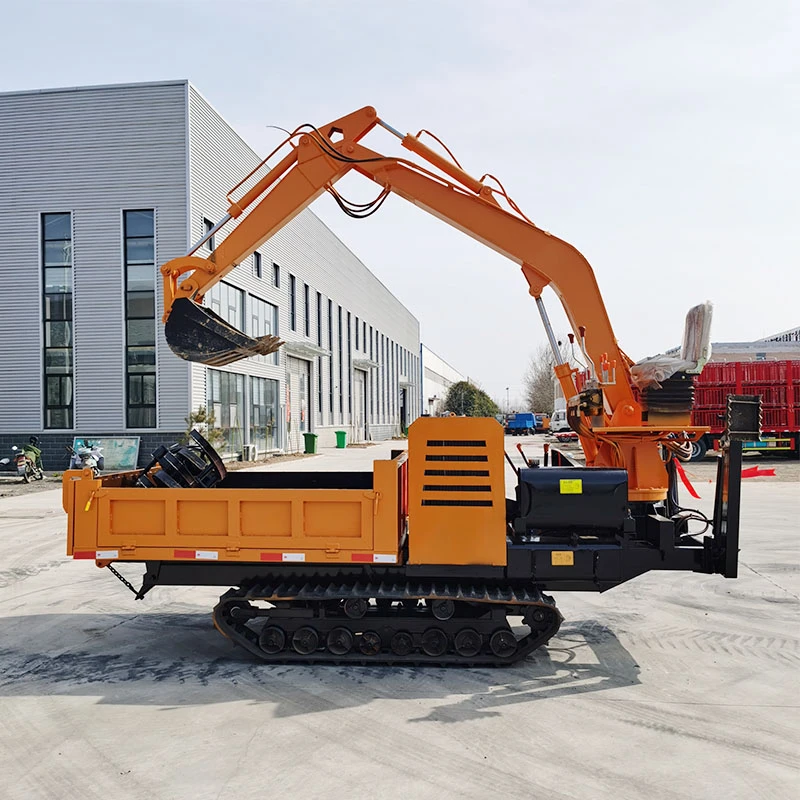
Semi-automatic crawler excavators are transforming high-risk construction sites
GPS-RTK precise unloading: Centimeter-level positioning accuracy ensures precise material placement even in blind spots.
Smart fleet: Through 5G connection, trucks can synchronize routes, reducing waiting time. An Australian iron ore operator reported that a fleet of three self-driving trucks saw a 22% increase in production efficiency.
4. Expand into new fields
In addition to mining and quarrying, emerging applications also include
Wind turbine installation: Low ground pressure allows access to muddy pre-construction sites without compacting the soil.
Disaster relief: Rapid deployment in flood/earthquake areas where roads have been damaged.
Urban micro-construction site: Compact electric crawler excavators (for example, 8-ton load) can be operated in narrow urban streets to perform foundation work with almost zero noise.
Industry Outlook
The global market is expected to grow at a compound annual growth rate of 6.8% (2024-2030), and demand is shifting from basic loading and unloading equipment to intelligent, ecologically adaptive systems. Nowadays, the key to success lies in how crawler excavators can be perfectly integrated into the digital construction ecosystem, rather than merely their load-bearing capacity.


