


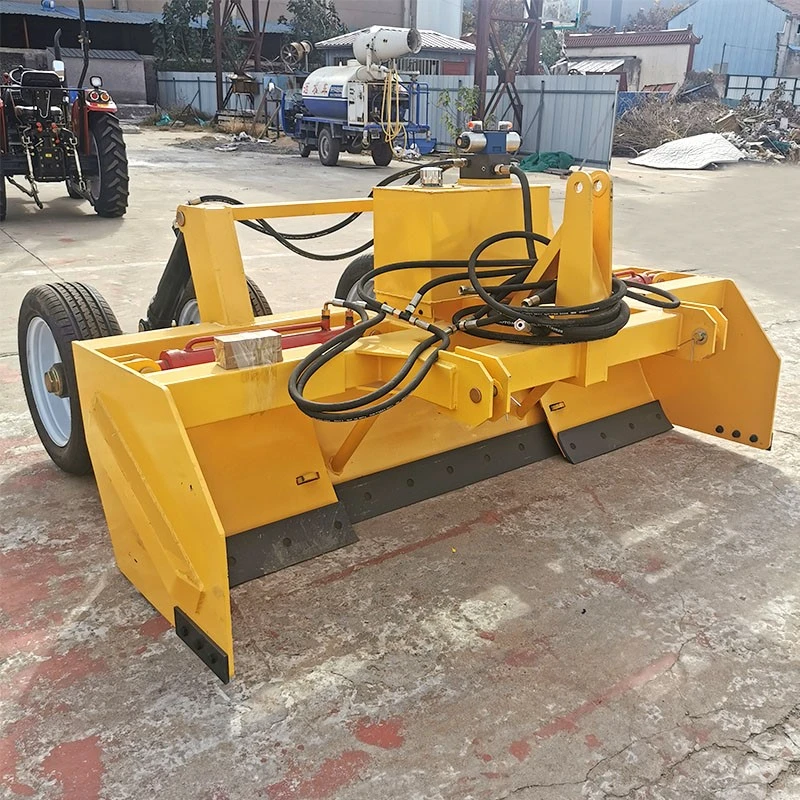
1. Laser land leveler hydraulic system maintenance (core focus)
Hydraulic oil management:
Oil selection: 46# anti-wear hydraulic oil must be used. In winter, it is recommended to use antifreeze hydraulic oil or aviation hydraulic oil to avoid system failure caused by low temperature solidification.
Regular replacement: Hydraulic oil needs to be replaced after the first use, and then replaced every 600 hours or after the busy farming season to prevent impurities from clogging the valve or damaging the hydraulic pump.
Oil circuit inspection: Before daily operation, check whether the oil pipe is leaking or damaged, and whether the interface (such as oil cylinder, solenoid valve, six-way interface) is sealed. When leaking, small holes can be repaired with sealant, and large holes need to replace the oil pipe.
Maintenance of key components:
Solenoid valve: Clean the valve body regularly to avoid valve jam caused by hydraulic oil impurities; if the coil is burned, it needs to be replaced in time.
Hydraulic pump and filter element: Clean the oil tank and replace the oil filter every 500 hours to ensure smooth oil circuit.
2. Laser land leveler laser system maintenance (accuracy guarantee)
Optical component protection:
Cleaning and storage: Wipe the transmitter and receiver lenses with a soft cloth after operation to prevent dust from affecting signal reception. Store in a dry and cool place, away from corrosive items.
Waterproof and moisture-proof: Dry in time on rainy days, and it is strictly forbidden to rinse the instrument (especially the solenoid valve combination) with water to prevent short circuit.
Calibration and power management:
Regular calibration: Calibrate the level of the laser transmitter every season or before operation to ensure the accuracy of the reference surface (±1.5~2.5cm).
Battery maintenance: Remove the battery if it is not used for a long time to avoid leakage and corrosion. Charge it once (about 8~12 hours) to avoid excessive discharge.
3. Laser land leveler mechanical structure maintenance
Leveling shovel and shovel blade:
Cleaning after operation: Thoroughly remove the soil on the shovel surface to prevent rust. Drop to the lowest position when storing to release the oil circuit pressure.
Edge protection: Avoid collision with hard objects (such as rocks and metals), check the wear regularly, and repair or replace in time.
Lubrication and tightening:
Lubrication of key parts: Grease the bearings, transmission shafts, and ground wheel shaft heads every day; lubricate the pins and hinges once per shift.
Bolt tightening: Check the screws of the whole machine, the safety chain at the traction suspension, and the fixing bolts of the oil cylinder every week to prevent loosening and causing accidents.
4. Storage specifications of Laser land leveler
Environmental requirements: Store in a garage or shed when out of use, and the ground should be dry and flat. Keep away from flammable materials and avoid sun and rain.
Oil pressure release: Adjust the hydraulic system to atmospheric pressure before long-term storage to avoid aging of seals.
Cable and oil pipe protection: The oil pipe is wrapped with waste tire strips to prevent folding; the cable is rolled up and stored to avoid pulling and breaking.
5. Laser land leveler regular maintenance plan (by time/working hours)
Daily: clean the shovel surface soil; check the oil circuit/cable connection; lubricate the bearings and drive shaft.
Every 100 hours: check the track tension, air filter, battery status; clean the heat sink.
Every 600 hours: replace the hydraulic oil and filter; clean the oil tank; check the laser transmitter.
Every 1800 hours: overhaul the engine and hydraulic pump; replace the coolant; tighten all connectors and repaint.
6. Laser land leveler safety operation specifications
Pre-operation inspection: confirm that the laser signal is received normally, the hydraulic lifting is flexible, and the emergency stop function is effective.
Fault handling: When abnormal lifting, oil leakage or control failure occurs, stop the machine immediately for investigation, and "operation with illness" is strictly prohibited.
Environmental adaptability: Avoid using the laser leveler in strong winds, dust, and haze weather (satellite type is more suitable for bad weather).
Regular maintenance of the Laser land leveler can not only reduce the failure rate (such as scraper stagnation, hydraulic leakage, etc.), but also improve the operation accuracy by more than 30%. It is recommended to formulate a detailed maintenance log in combination with the equipment manual and actual working conditions to ensure that each maintenance is implemented in place.


