


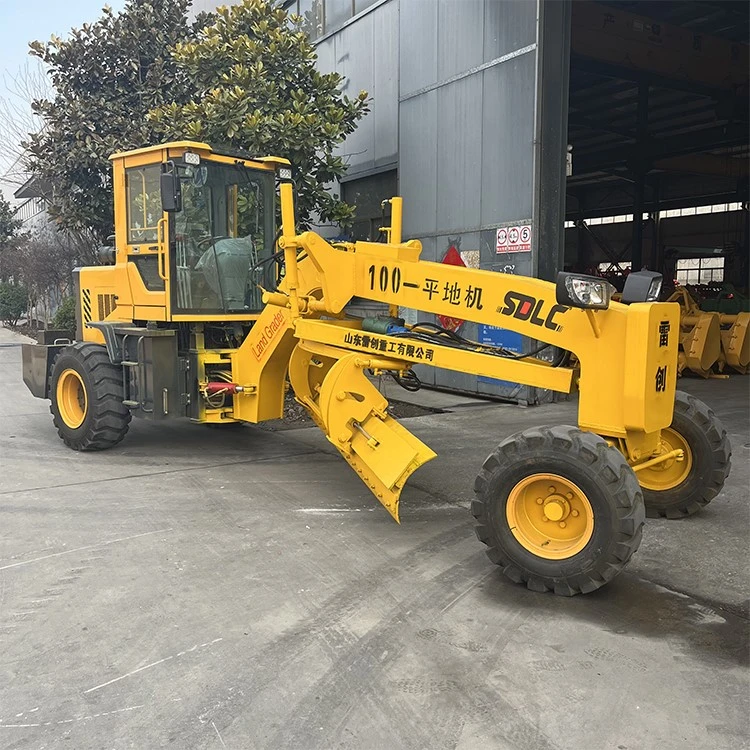
Ⅰ. Daily operation maintenance
Pre-start inspection
Check for hydraulic oil/coolant leakage, record tire wear, hose deformation and other abnormalities;
Remove debris from the blade slide rail and ensure that the safety signs are clearly visible;
Visually check the brake fluid level (≤1 inch from the container cover);
Post-operation processing
Rinse the blade and chassis dirt thoroughly to prevent corrosion;
Check the cleanliness of the hydraulic oil (NAS 8 level standard);
Lubricate the steering joint (3 places) and the blade lifting shaft (2 places) with lithium-based grease;
Ⅱ. Periodic deep maintenance
1. 50-hour maintenance
Replace the engine oil (recommended CH-4 grade 15W-40);
Calibrate the blade level (error ≤3mm/3m);
Check the tension of the drive belt (10-15mm is best);
2. 400-hour maintenance
Replace the hydraulic system filter element (pilot + return filter element);
Drain the gear oil sediment and fill with 75W-90 GL-5 grade synthetic gear oil;
Adjust the handbrake clearance and joystick travel;
3. Seasonal adaptation
Winter: Replace -35# antifreeze and install a fuel preheater;
Rainy season: Strengthen the circuit waterproofing (focus on wrapping the wiring harness connector);
III. Special maintenance of key systems
Laser leveling system
Use the calibration plate to calibrate the receiver accuracy every week to avoid strong light directly hitting the sensor;
Remove the mast and fix it separately during transportation;
Intelligent temperature control system
Clean the condenser fins before summer and preheat the coolant before starting in winter (forced preheating below 5℃);
Long-term parking management Remove the battery and store it in a dry environment (0-21℃) and keep it fully charged;
Spray anti-rust paint on the whole machine to treat the peeling paint parts;
IV. Digital maintenance suggestions
Establish an electronic health record (EHR) to record oil spectral analysis,
3D scanning data, etc.; Configure a vibration sensor network to achieve predictive maintenance.


