

I. Overview of snowplows
Snowplows are a type of mechanical equipment specifically used to remove snow, and are widely used in urban roads, highways, airport runways, parking lots, residential areas and other places. With the advancement of technology, modern snowplows have developed from simple mechanical devices to highly efficient snow removal equipment that integrates mechanical, hydraulic and electronic control.
Ⅱ. Classification and technical features of snow blowers
1. Classification by working principle
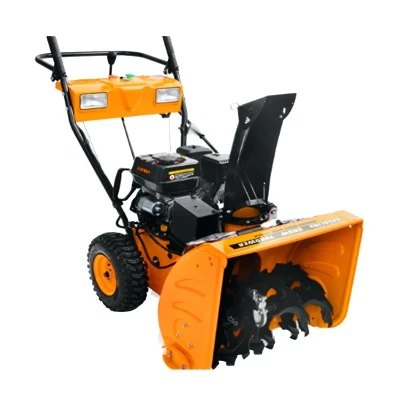
(1) Snowblower Adopts high-speed rotating impeller to blow snow away from the working surface;
Core component: centrifugal fan (speed can reach 2000-4000rpm);
High snow removal efficiency, suitable for loose snow;
The latest model is equipped with variable frequency speed motor, which reduces energy consumption by 15-20%;
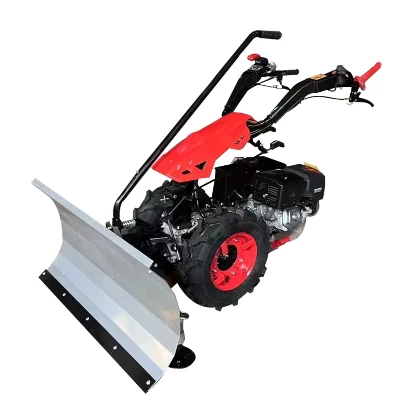
(2) Snowplow Push the snow to one side through the front shovel;
The hydraulic system controls the shovel angle (usually 0-30° adjustable);
The latest technology uses memory alloy shovel blade to automatically adapt to the unevenness of the ground;
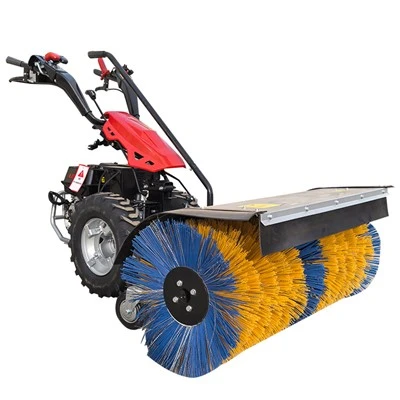
(3) Rotary sweeper Combines the dual functions of rotating brush and shovel;
The brush bristles are developed into carbon fiber composite materials, which extend the life by 3 times;
Some high-end models are equipped with heating system to prevent wet snow from sticking;
2. Classification by power source
(1) Internal combustion engine drive
Traditional mainstream, power range 30-300 horsepower;
The latest emission standards reach National VI/Euro VI;
Fuel efficiency increased to more than 95%;
(2) Electric snowplow
Breakthrough in lithium battery technology (energy density up to 300Wh/kg);
Working noise is less than 65 decibels;
Zero emission, suitable for urban environmental protection requirements;
(3) Hybrid power
Combines the advantages of internal combustion engine and electric motor;
Intelligent energy management system can save 30% of fuel;
III. Progress in key technologies
1. Intelligent control system
Adopts multi-sensor fusion technology (lidar + millimeter wave radar + vision);
Automatically identifies snow thickness and type, and adjusts working parameters;
Some high-end models have achieved L3 level automatic driving function;
2. Material technology
The shovel blade adopts high-strength aluminum alloy (tensile strength ≥400MPa);
Wear-resistant coating technology extends the life of key components by 50%;
The application of new composite materials reduces the weight of the whole machine by 10-15%;
3. Optimization of snow removal efficiency
Computational fluid dynamics (CFD) optimizes airflow channel design;
Snow removal width can reach 4-8 meters, speed 8-15km/h;
The latest model has a snow removal efficiency of 5000-8000㎡/h;
IV. Application scenario expansion
Urban road snow removal: Connect to the municipal management system to achieve intelligent scheduling;
Airport runway snow removal: Meet the strict standards of FAA/EASA, and the friction coefficient after snow removal is ≥0.5;
Highway snow removal: Fleet collaborative operation, 5G remote monitoring;
Community property snow removal: Miniaturization, low noise design;
V. Future development trend
Full automation: Structure Combine 5G and AI technologies to achieve fully autonomous operation;
Energy diversification: new energy applications such as hydrogen fuel cells;
Multi-function integration: integrated design of snow removal, watering, and sweeping;
Digital twin technology: virtual simulation optimizes snow removal solutions;
VI. Purchase and maintenance recommendations
Choose the appropriate type according to the type of snow accumulation and the operating area;
Regularly check the hydraulic system and transmission components;
Perform comprehensive maintenance before winter use;
Pay attention to rust prevention during storage;
With technological advances and increased environmental protection requirements, modern snowplows are developing in a more efficient, smarter, and more environmentally friendly direction, providing strong support for winter transportation security and urban management.


