


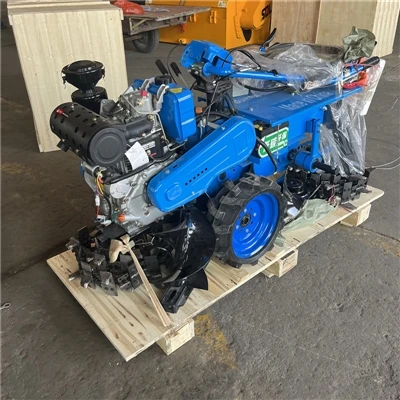
Walk-behind chain trencher: principle and structure
The walk-behind chain trencher is a small farmland trenching equipment that uses a chain transmission system to drive the trenching cutter and is powered by a diesel engine or electric motor. Its core structure includes:
1. Power system: usually equipped with a 6-15 horsepower diesel engine, and some models support electric drive;
2. Transmission device: chain and gear set to achieve power transmission to ensure stable torque output;
3. Trenching parts: replaceable alloy cutters, supporting trench width 10-30cm, depth 30-80cm adjustment;
4. Control mechanism: The walk-behind design is equipped with a hydraulic steering system, and the operator can accurately control the direction of travel.
Core advantages and application scenarios
1. Efficient operation: 100-200 meters of ditches can be excavated per hour, which is more than 20 times more efficient than manual operation;
2. Wide adaptability: Suitable for farmland drainage, cable laying, orchard drip irrigation and other scenarios;
3. Low-cost maintenance: Modular design makes tool replacement and chain adjustment convenient, and the maintenance cost is lower than that of wheeled trenchers.
Purchase and use suggestions
1. Soil matching: It is recommended to choose a large torque model in clay areas, and light equipment can be used for sandy soil;
2. Safe operation: Protective equipment must be worn to avoid the chain from getting close to loose clothing when running at high speed;
3. Maintenance points: Clean the dirt on the tool after operation, lubricate the chain regularly and check the tension.


