

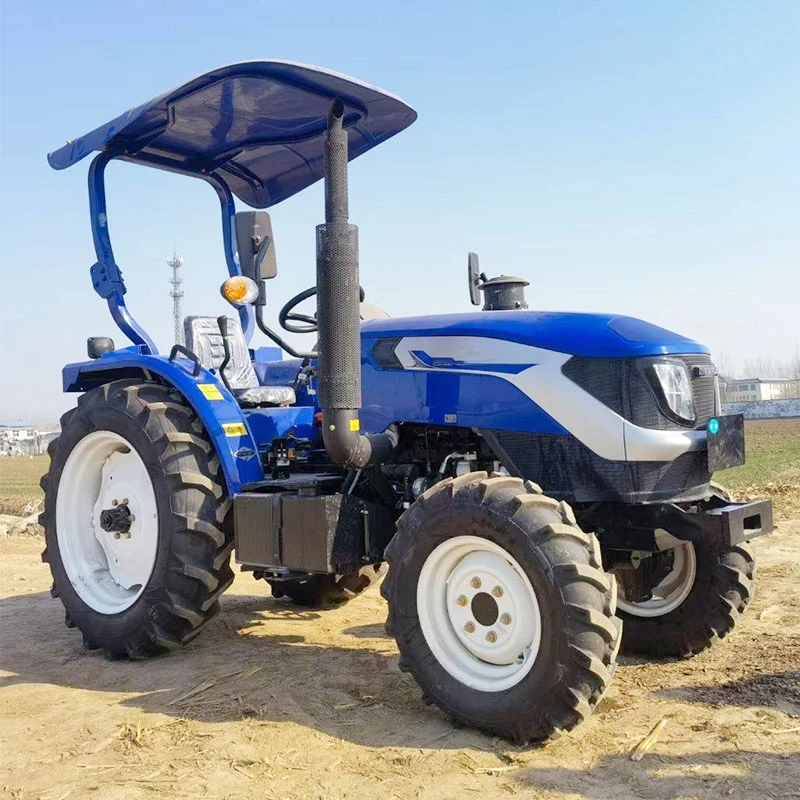
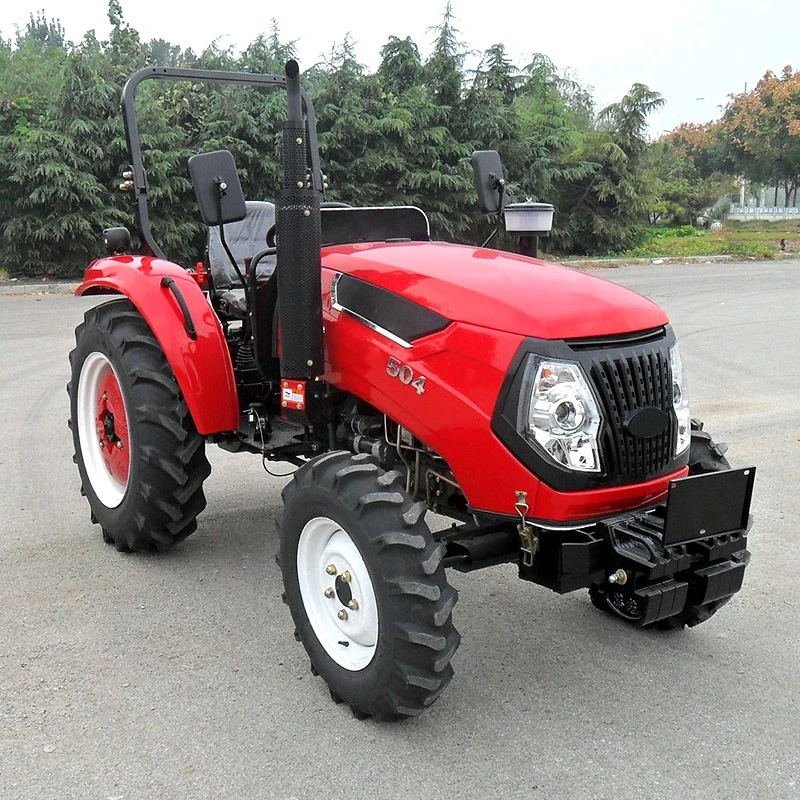
Safe use and standardized operation are the key
1. Preparation before starting:
Comprehensive inspection:
Fluids: Check whether the engine oil (between the dipstick scale in a cold state), diesel (sufficient and clean), coolant (liquid level between MIN and MAX in the expansion tank), hydraulic oil (in compliance with standards), gear oil, etc. are sufficient and leak-free.
Key parts: Tire pressure (in compliance with manufacturer requirements, check whether there are cracks and bulges on the sidewalls), and the tightness of the hub nuts.
Braking performance: Test whether the driving brake and parking brake are sensitive and reliable.
Working device: Check whether the hooking of each working device (three-point suspension, power output shaft PTO, hydraulic quick-change connector) is firm and in place; the traction device pin is reliably locked.
Battery: Check whether the electrode column connection is firm and whether there is corrosion.
Appearance: Check whether the lighting, signal lights (steering, brake), horn, and rearview mirror are intact and effective.
Cleanliness: Remove flammable materials such as oil, debris, weeds, etc. around the engine, exhaust pipe, and cab.
Confirmation before driving: Make sure all operating handles (PTO, hydraulic control) are in the "neutral" or "neutral" position; the main clutch pedal is pressed.
2. Starting and warming up:
Cold start: Preheat before starting (if equipped with a preheat plug).
Starting process: Press the clutch pedal (if any), turn the key to the "start" position, the starting time should not exceed 10 seconds, and the interval between each start should be at least 30 seconds.
Fully warm up: After starting, run at low speed and idle for 3-5 minutes, and then gradually accelerate after the water temperature gauge pointer starts to rise and the oil pressure stabilizes. Avoid high-speed and high-load operation immediately after starting!
3. Operation specifications:
Clutch use: Separate and engage the clutch smoothly to avoid long semi-clutch time causing clutch plate burnout.
Shifting operation: When the gearbox is engaged/shifting, the clutch pedal must be pressed firmly and the operation must be performed after the tractor has completely stopped (the synchronized gearbox allows for gentle shifting while driving). It is strictly forbidden to use the clutch to slide.
Load matching: Select the appropriate gear and throttle opening according to the type of operation (ploughing, rotary tillage, transportation, etc.). Avoid improper operation of "small horse pulling a big cart" (overload) or "big horse pulling a small cart" (high gear, low speed and high throttle) for a long time.
PTO use:
After the engine speed stabilizes at low and medium speeds, the power output shaft (PTO) is smoothly engaged.
The matching shaft of the agricultural implement must match the tractor PTO shaft (such as: 540r/1000r/min).
Check whether the protective cover of the agricultural implement is firm and effective.
The agricultural implement can only be left for operation after it is working normally.
Before stopping/leaving, the PTO must be separated first!
Hydraulic system use: Work above the medium engine speed and avoid long-term pressure maintenance at the extreme position (highest lifting and lowest lowering). Pay attention to the protection of hydraulic pipelines to prevent friction and collision.
Steering and braking: When driving downhill at high speed or with heavy load, change to a low gear in advance and use the engine brake in conjunction with the foot brake to avoid overheating and failure of the brake due to long-term braking. It is strictly forbidden to engage in creeper gear or reverse gear while driving!
Vision and speed: Obey traffic rules, pay attention to avoid pedestrians and vehicles when driving on the road, drive slowly and carefully when driving in complex terrain or turning, and make full use of the rearview mirror.
Prohibited behavior: It is strictly forbidden to inspect and clear blockages when the engine is running; it is forbidden to jump on and off the moving tractor; it is strictly forbidden to use lubricants and diesel to wash skin and clothes; it is forbidden to carry unrelated personnel!
4. Stop:
Smooth stop: Reduce the throttle and run at idle speed for 1-2 minutes (especially after heavy load) to gradually dissipate the heat of the engine.
Key operations: Put the PTO gear lever in "neutral"; put the hydraulic lifting lever in the "down" position (to make the suspended agricultural machinery fall to the ground).
Shut down and turn off the power: Turn off the engine and remove the key.
Parking brake: Press the service brake pedal and securely tighten the parking brake handle (if any). When parking on a slope, the tires must be covered.
Safety inspection: Walk around the vehicle to check for any abnormalities (water leakage, oil leakage, etc.).


