

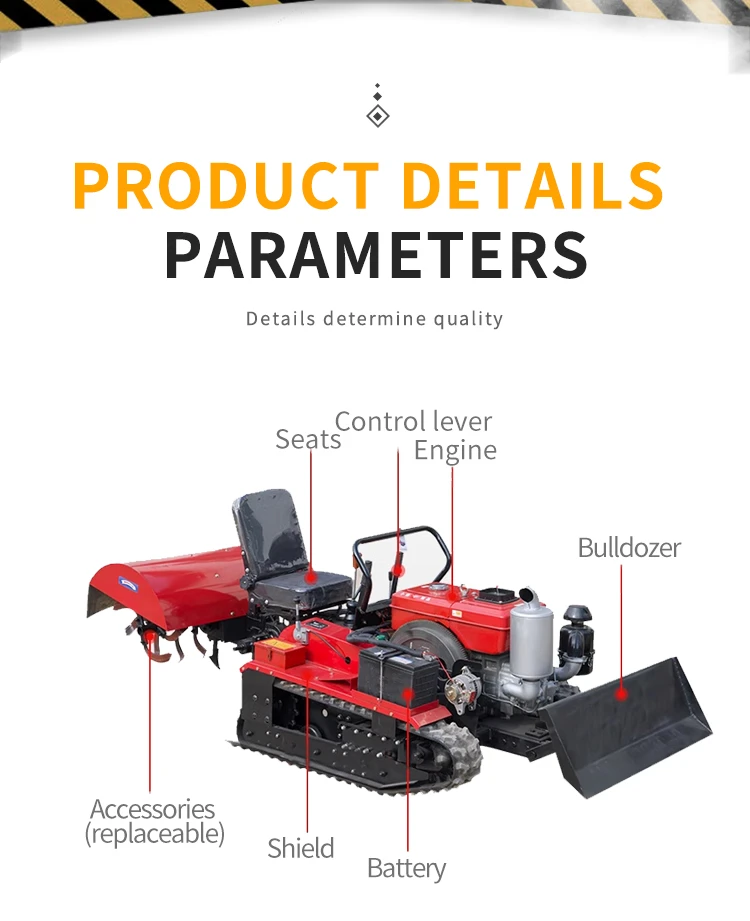
Good passability: The crawler structure of the crawler rotary tiller makes its ground contact area large and not easy to sink, which is especially suitable for operation in soft land or paddy fields.
High stability: In wet and uneven paddy fields, the stability of the crawler rotary tiller is better than that of a wheeled tractor, which reduces the bumps and shaking during operation, and is conducive to the smooth operation and safe operation of the tillage tools.
Strong adhesion: The crawler rotary tiller has a large traction adhesion and is more suitable for paddy field rotary tillage operations, and can provide sufficient power in a muddy environment.
Versatility: The crawler rotary tiller can not only be used for rotary tillage, but also for trenching, fertilizing, weeding, plowing and other farm work. One machine can be used for multiple purposes, saving the cost of purchasing multiple machines56.
Flexible operation: The crawler rotary tiller can turn on the spot, has good maneuverability, and is suitable for operations in small and low spaces.
Adaptable to various terrains: The crawler walking structure makes the whole machine have better off-road, passability and climbing performance, and is suitable for various terrain roads. The crawler rotary tiller performs well in paddy fields and soft land, has high stability and adhesion, and has versatility and good passability.
The advantages of crawler rotary tillers are that they have a large contact area with the ground, and they are not easy to sink in soft soil, and they will not cause compaction after rolling the land.
Crawler self-propelled rotary tillers have obvious ecological protection effects on paddy fields because they do not damage the tillage layer structure of paddy fields, and can make rice fields enter a virtuous cycle.
From the perspective of the flatness of the land after cultivation, fuel consumption, and work efficiency, they have advantages that traditional rotary tillers cannot match.


